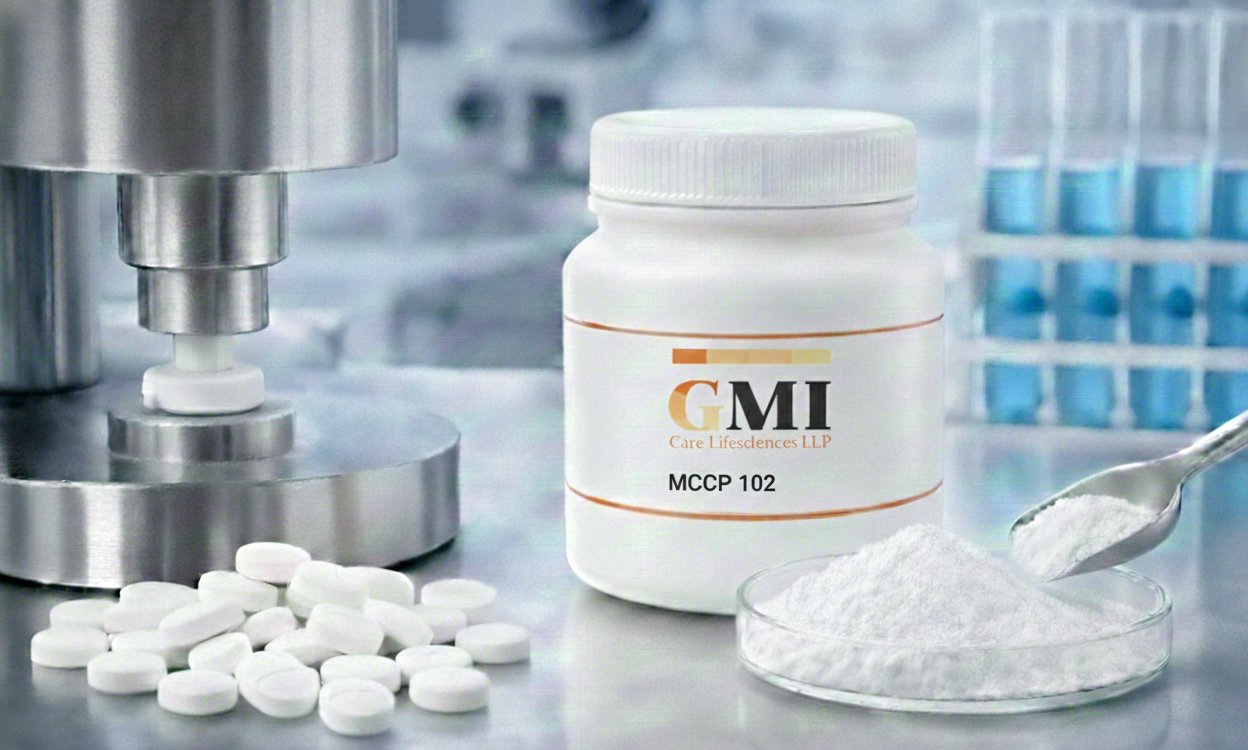
A mid-size pharmaceutical formulation manufacturer using direct compression technology faced challenges in achieving consistent tablet hardness and quality. The performance of the binder and filler was critical due to the presence of multiple APIs and excipients. Variations in compressibility and flow were affecting tablet integrity and production efficiency. To overcome these issues, the manufacturer partnered with GMICare Lifesciences LLP (GMI) for a reliable excipient solution. GMI recommended MCCP 102, optimized for direct compression applications.
Client Challenges
- Low tablet hardness despite higher compression force.
- High friability leading to breakage during coating.
- Poor powder flow resulting in weight variation.
- Increased rejection during in-process quality checks.
GMI Solution:
GMI’s technical team carefully reviewed the customer’s tablet performance data and in-process quality results to understand the root cause of low hardness and poor flow. The material properties of the previously used MCCP were evaluated and compared, which highlighted limitations in compressibility and flowability. Based on this assessment, MCCP 102 was recommended as a suitable solution for direct compression. Trial samples were provided and evaluated through pilot-scale studies in coordination with the customer. During these trials, blending and compression parameters were optimized to achieve stable processing. The improved tablet hardness, flow, and weight uniformity were consistently observed across batches, leading to successful commercial implementation.Results:
- Tablet hardness increased by 25%.
- Improved powder flow eliminated weight variation issues
- Compression ran smoothly at higher speeds.
- Production Efficiency increased by 16% for client.
Author
krunal.gmi